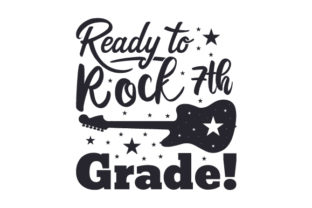
Ready to Rock 7th Grade: An Embroidery Design Review
As a professional embroidery designer and product reviewer, I approach every new machine embroidery design with a critical eye. It is not enough for a graphic to look good on a screen; it must translate beautifully through needle and thread. When evaluating Ready to Rock 7th Grade, my primary focus is on its viability for real-world production. This design targets a very specific niche within the School Amp category, celebrating the transition into middle school. For crafters, Etsy sellers, and apparel decorators, this milestone moment offers a unique opportunity to create meaningful merchandise, but only if the digital asset holds up during the stitching process.
First Impressions and Visual Personality
Upon opening the files, Ready to Rock 7th Grade immediately communicates a sense of energetic confidence. The typography suggests movement and excitement, which is exactly the mood you want to capture for a student entering a new academic chapter. From a design perspective, the layout feels balanced. It avoids being overly cluttered, which is a common pitfall in grade-specific designs where creators try to cram too many icons or mascots into a single hoop. Instead, this design relies on strong lettering and purposeful negative space.
For a handmade product, this visual clarity is essential. When I assess a design for potential use in a craft business, I look for versatility. This artwork has a bold personality that would serve as an excellent centerpiece for back-of-hoodie placements or a left-chest logo on a polo. It feels modern rather than dated, which increases its perceived value for parents and students alike. The aesthetic bridges the gap between playful elementary styles and more mature teen graphics, making it a safe yet stylish choice for custom apparel.
Real-World Application: The Custom Sweatshirt Test
To truly judge the merit of Ready to Rock 7th Grade, I mentally placed it in a production scenario. Imagine preparing a custom embroidered sweatshirt for a "Meet the Teacher" night or a first-day-of-school photo op. Sweatshirts are typically made of fleece or French terry, fabrics that have texture and stretch. A successful sweatshirt embroidery project requires a design that does not distort when the fabric relaxes after hooping.
In this scenario, Ready to Rock 7th Grade performs well because of its likely reliance on clean lines and manageable fill areas. If I were stitching this out, I would anticipate using a cutaway stabilizer to support the stretchy knit. The design’s structure allows for high contrast thread colors, perhaps a metallic gold or silver against a navy or maroon sweatshirt, to really make the "Rock" element pop. This kind of personalized gift resonates deeply with customers because it marks a specific achievement. Unlike generic school gear, a piece featuring this specific design validates the student's new status. For an Etsy seller, offering this level of specificity can differentiate your shop from mass-market retailers.
Navigating Fabric Choices and Hoop Limitations
While the design is versatile, practical judgment dictates where it should be used with caution. Not all projects in the Crafts category are created equal. If you plan to use Ready to Rock 7th Grade on lightweight fabrics like baby tees or thin cotton totes, you must evaluate the stitch density. Heavy satin stitches or dense fills can cause puckering or even tear delicate material. Always test on scrap fabric first. If the design includes intricate details, they may get lost on textured fabrics like terry cloth or minky unless you use a water-soluble topping to keep the stitches visible.
Hoop size is another critical factor. Before purchasing or stitching, confirm that the dimensions fit your machine’s capabilities. A design that looks spacious in a 5x7 hoop might feel cramped or require excessive resizing in a 4x4 hoop, potentially compromising stitch integrity. Furthermore, consider the end-use of the finished product. Items destined for frequent washing, such as aprons or kitchen towels, require secure anchoring stitches. If Ready to Rock 7th Grade features standalone running stitches or delicate serif fonts, ensure they are digitized with sufficient underlay to prevent fraying over time. For curved surfaces like caps, verify that the design has been digitized specifically for cylindrical hoops; flat designs often distort when forced onto a hat frame.
Commercial Viability and Brand Consistency
For creative entrepreneurs and small shop owners, Ready to Rock 7th Grade represents more than just a pretty picture; it is a commercial asset. However, professionalism extends beyond the stitch file. You must verify licensing terms before selling finished items or using the artwork in printable mockups. Assuming commercial rights are secured, this design can anchor a seasonal collection. Its clear theme aids in SEO and buyer engagement; parents searching for "7th grade gifts" are looking for exact matches, not approximations.
Brand consistency is also key. If your shop specializes in minimalist aesthetics, ensure this design aligns with your existing catalog. The provided formats—SVG, Transparent PNG, EPS, and DXF—offer flexibility for mixed-media projects. You could use the SVG for vinyl decals on tumblers and the embroidery file for matching tote bags, creating a cohesive product line. This cross-platform utility maximizes the return on investment for your design assets. Just remember that while vector files are great for print, only the dedicated digital embroidery file should be used for stitching. Never attempt to auto-digitize a vector file without professional adjustment, as the result will likely lack proper pull compensation and trims.
Essential Designer Notes for Success
Before loading Ready to Rock 7th Grade into your machine, adhere to these professional best practices to ensure a premium result:
- Test Stitching: Never skip the test run. Use a fabric weight similar to your final project to check for registration issues or tension problems.
- Stabilizer Selection: Match your stabilizer to the fabric, not just the design. Stretchy knits need cutaway; wovens generally do well with tear-away; sheers require water-soluble backing.
- Thread Contrast: View the design in black and white during the planning phase. If the values are too similar, the design will disappear on the fabric regardless of color hue.
- Mockup Verification: Create realistic mockups to show customers scale. A design that looks massive on screen might be subtle on a chest pocket. Accurate representation builds trust.
- Detail Inspection: Zoom in to check small text elements. If letters are thinner than 1mm, they may need to be converted to running stitch or removed entirely to prevent needle breaks.
- Color Mapping: Plan your thread changes efficiently. Grouping similar colors reduces production time and improves the flow of the embroidery project.
Final Thoughts on Production Value
Ready to Rock 7th Grade shows strong promise for makers who understand their materials and machines. It captures a celebratory spirit appropriate for the School Amp niche while maintaining the structural simplicity needed for clean embroidery. Whether you are creating a tote bag design for a book fair, an embroidered patch for a backpack, or a commemorative pillow cover, success lies in the execution. By respecting fabric limitations, verifying file compatibility, and prioritizing stitch quality over speed, you transform a digital download into a tangible keepsake. For the experienced embroiderer, this design is a tool that, when wielded correctly, produces results that delight clients and elevate the standard of handmade goods.