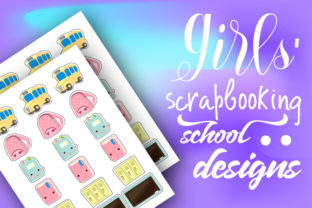
Girls Scrapbooking School Designs: A Maker's Review
When evaluating digital assets for physical production, there is often a disconnect between what looks good on a screen and what actually translates to needle and thread. As a designer who regularly bridges the gap between digital planning and tangible crafts, I approached the Girls Scrapbooking School Designs with a critical eye toward real-world application. While this collection is categorized under Planner and Crafts, its aesthetic roots suggest strong potential for textile adaptation. My review focuses not just on the visual charm of these graphics, but on their viability as a foundation for machine embroidery design, custom apparel, and commercial handmade products.
Translating Digital Aesthetics to Stitched Reality
The first impression of Girls Scrapbooking School Designs is one of nostalgic warmth and organized creativity. The visual personality leans heavily into academic motifs, paper textures, and playful typography that evokes the feeling of a well-loved journal or a customized school binder. For an embroidery designer, this mood is gold. It suggests projects that are personal, sentimental, and highly giftable. However, scrapbook aesthetics are inherently flat and layered, which presents a unique challenge when converting them into an embroidery file.
In my assessment, these designs naturally belong on items that mimic the tactile nature of paper crafts. I immediately envisioned a custom embroidered tote bag for a teacher or a personalized sweatshirt for a student. The layout feels balanced enough to serve as a central focal point on a pillow cover or a decorative accent on a nursery blanket. Unlike generic clip art, these designs possess a narrative quality that adds perceived value to a finished product. They do not look like mass-produced stock; they look like intentional, curated art, which is exactly what Etsy sellers and boutique owners need to justify premium pricing.
Real-World Application: The Custom Sweatshirt Test
To truly evaluate utility, I mentally prototyped a specific project: a back-to-school crewneck sweatshirt intended for a small shop merchandise drop. In this scenario, Girls Scrapbooking School Designs would serve as the primary graphic on the back yoke or chest area. The key consideration here is how the intricate lines typical of scrapbooking styles interact with fabric texture.
For this sweatshirt embroidery application, the design’s detail level requires careful digitizing strategy. If utilizing these graphics as an applique design, the shapes provide excellent coverage and reduce overall stitch density, keeping the garment soft and wearable. If executed purely as thread work, I would recommend combining satin stitch borders with lighter fill stitch interiors to maintain the "paper cutout" look without creating a bulletproof patch of thread. This approach preserves the delicate, handmade feel while ensuring the design survives washing. For a craft business targeting parents and educators, this specific application bridges the gap between trendy digital planner culture and lasting, physical keepsakes.
Navigating Fabric Constraints and Technical Limits
While the aesthetic versatility is high, practical execution demands caution. Not every surface is friendly to the detailed nature of Girls Scrapbooking School Designs. Based on experience with similar stylistic elements, here is where you must proceed carefully:
- Textured and Stretchy Fabrics: The fine lines often found in school-themed graphics can get lost on terry cloth towels or ribbed knits. On stretchy fabrics like jersey, inadequate stabilization will cause registration issues, making detailed corners look sloppy.
- Small Hoop Sizes: Scaling down complex scrapbook layouts to fit a 4x4 hoop size often results in illegible text or merged details. Always verify the minimum viable size before committing to baby clothes or cap embroidery.
- Dark Fabrics: These designs likely rely on contrast to mimic paper layers. On dark garments, you may need to add a white underlay or adjust thread colors significantly to prevent the design from disappearing into the background.
- Frequent Washing: If using these for kitchen tea towels or children's aprons, ensure the digitization includes adequate underlay. Decorative running stitch accents common in this style may pull out over time if not anchored properly.
Understanding these limitations prevents wasted materials and protects your reputation as a maker. A beautiful digital file can become a frustrating embroidery project if the substrate isn't matched correctly to the design complexity.
Impact on Brand Value and Customer Trust
For creative entrepreneurs and digital product sellers, the choice of design assets directly influences buyer engagement. Girls Scrapbooking School Designs offer a distinct advantage: specificity. In a saturated market of generic school icons, these designs carry a cohesive theme that helps build brand consistency across a product line.
When customers see a professionally stitched version of these designs in your listing photos, it signals competence. High-quality stitching clarity on complex shapes builds trust. Conversely, poor execution highlights flaws. Using these designs effectively demonstrates that you understand both the artistic intent and the technical requirements of commercial embroidery. Whether you are selling the finished personalized gift or the digital embroidery file itself, the professional presentation derived from respecting the design's integrity leads to higher conversion rates and repeat business.
Essential Designer Notes for Successful Execution
Before loading these files into your machine or listing them in your shop, adhere to this practical checklist. These steps are non-negotiable for maintaining quality standards:
- Verify File Compatibility: The product description lists SVG, Transparent PNG, EPS, and DXF formats. Note that these are vector and raster graphic formats, not native embroidery formats like PES or DST. You must either digitize these yourself or hire a professional digitizer to convert them into a usable machine embroidery design. Do not assume they are stitch-ready out of the box.
- Test on Scrap Fabric First: Never run a new design on a final product without testing. Check stitch density and tension on a fabric swatch that matches your intended project weight.
- Evaluate Thread Color Contrast: Test the design in black and white mockups before stitching. If the values are too similar, the design will lack depth. Adjust thread colors to enhance the separation between "paper" layers.
- Confirm Licensing Terms: Before selling finished items or modified digital assets, explicitly check the license included with Girls Scrapbooking School Designs. Ensure you have commercial rights for both physical products and digital resale if applicable.
- Stabilizer Selection: Match your stabilizer to the fabric, not just the design. Cut-away stabilizer is generally safer for the detailed nature of these graphics on apparel, while tear-away may suffice for woven cottons.
- Mockup Accuracy: When creating printable mockups for Etsy listings, use realistic fabric textures rather than flat digital overlays. This manages customer expectations regarding how the embroidery will actually appear.
Final Thoughts for Makers and Sellers
Girls Scrapbooking School Designs represent a charming intersection of digital planning trends and traditional crafting. For the experienced embroiderer, they offer a rich canvas for creating meaningful, themed products that resonate with students, teachers, and parents. The key to success lies in respecting the translation process from vector art to stitched reality. By paying attention to fabric compatibility, proper digitization, and rigorous testing, you can transform these digital assets into high-value handmade products that stand out in a crowded marketplace. Whether used for a boutique product line or a cherished holiday gift, these designs hold significant potential for those willing to apply professional judgment to their creative process.