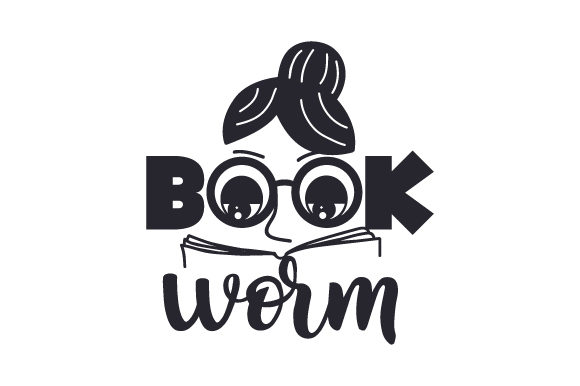
Book Worm: A Designer’s Stitch-Out Review
First Impressions and Visual Personality
When evaluating a new machine embroidery design for my shop, I look beyond the digital preview to imagine how it will actually live on fabric. The Book Worm design immediately strikes a balance between whimsy and nostalgia. It possesses a distinct visual personality that feels curated rather than generic, which is essential for standing out in a saturated market. As a reviewer and maker, my first assessment focuses on the silhouette and flow. This design has a natural curve and organic shape that suggests movement, making it feel alive rather than static. For those of us in the School Amp niche or general Crafts category, this aesthetic is gold. It communicates literacy and warmth without being overly juvenile, allowing it to bridge the gap between children’s items and adult reader merchandise.
The inclusion of multiple file formats, specifically SVG, Transparent PNG, EPS, and DXF, signals versatility. While these are often associated with cutting machines or sublimation, having a high-quality Transparent PNG is invaluable for creating accurate printable mockups. Before I even thread my needle, I can overlay this asset onto photos of sweatshirts or tote bags to gauge scale and placement. This step saves time and materials, ensuring the Book Worm concept translates effectively from screen to physical product.
Real-World Application: The Library Tote Test
To truly judge this design, I mentally placed it in a real-life scenario: creating a custom canvas tote bag for a local library fundraiser and subsequent Etsy listing. Tote bags are a staple embroidery project, but they present unique challenges due to the coarse weave of canvas. In this context, Book Worm needs to hold its own against the fabric texture. I envision placing the design slightly off-center or anchored at the bottom corner for a modern, boutique look rather than the traditional dead-center placement.
For this specific application, the design’s potential for mixed media stands out. If the Book Worm includes elements suitable for an applique design, it would reduce overall stitch density while adding tactile interest. Canvas can be unforgiving with dense fill stitches, leading to puckering or a stiff hand-feel. However, if the design relies on clean lines and strategic fills, it will drape better. As a small business owner, I am also thinking about production speed. A design that balances visual impact with reasonable stitch times allows for better profit margins on commercial embroidery runs. This motif feels like it could be stitched efficiently without sacrificing the detail that makes a handmade product feel premium.
Navigating Fabric Variables and Hoop Constraints
Every experienced embroiderer knows that a digitized file behaves differently across substrates. When considering Book Worm for custom apparel like lightweight t-shirts or baby onesies, caution is required. Thin knits stretch, and if the design has heavy satin borders or dense centers, it can distort the garment. I always recommend testing on a scrap of the exact fabric weight you intend to use. For stretchy fabrics, using a cut-away stabilizer is non-negotiable to maintain registration. If the design features tiny text or intricate facial details, verify that they remain legible when scaled down for baby embroidery. Sometimes, reducing a complex design by 30% causes small elements to merge into unrecognizable blobs.
Conversely, when working with textured fabrics like terry cloth towels or fleece blankets, the opposite problem arises. The pile can swallow fine details. Here, Book Worm would benefit from a topping stabilizer to keep the stitches sitting proudly on top of the nap. I also consider hoop size limitations early in the planning phase. Ensure your machine’s hoop accommodates the full dimensions with adequate margin for stabilization. Nothing is more frustrating than realizing mid-project that the design requires a larger hoop than you own. For curved surfaces like caps, verify the design height; tall vertical motifs often require significant re-digitizing to fit the limited sewing field of a hat frame.
Elevating Product Value and Brand Consistency
In the world of Etsy sellers and creative entrepreneurs, visual consistency builds trust. Using Book Worm as part of a cohesive collection can strengthen brand recognition. Because the files include vector formats (SVG/EPS), you can easily match vinyl decals or screen prints to your embroidered goods. Imagine offering a matching set: an embroidered sweatshirt featuring Book Worm paired with a vinyl-decaled mug using the same artwork. This cross-platform utility increases the perceived value of your design assets.
Customer engagement often hinges on presentation. The provided Transparent PNG allows you to create professional listings without needing to stitch every color variation immediately. You can showcase the design on dark and light backgrounds digitally to demonstrate versatility. However, never rely solely on digital previews. Buyers appreciate seeing actual finished product photos because they reveal thread sheen, texture, and true scale. When I review designs for potential best-sellers, I ask: Does this evoke an emotional response? Book Worm taps into the identity of readers and students, making it highly giftable. Whether for a teacher appreciation gift, a back-to-school item, or a holiday present, the theme carries inherent sentimentality that drives sales.
Critical Technical Notes for Makers
Before launching this design into production, adhere to these practical checkpoints to ensure professional results:
- Verify Licensing: Confirm whether your purchase includes commercial rights for selling finished physical products versus digital files. Never assume; check the seller’s terms explicitly.
- Test Stitch-Out: Always run a test on scrap fabric similar to your final project. Check for thread breaks, tension issues, or alignment errors before committing to expensive blanks.
- Thread Color Contrast: Evaluate your palette against the fabric. Low-contrast threads make details disappear. Use high-contrast colors for outlines and defining features to ensure clarity.
- Stabilizer Selection: Match stabilizer weight to both the fabric and the design density. Over-stabilizing creates stiffness; under-stabilizing causes distortion.
- Mockup Validation: Use the Transparent PNG to test placements digitally, but validate with a physical sample to confirm the "feel" matches the visual expectation.
- Wash Testing: If selling items meant for frequent laundering (like kitchen towels or baby clothes), wash your test piece to ensure the design holds up without excessive shrinkage or thread pull.
Final Verdict for Creative Businesses
Book Worm presents itself as a versatile contender for makers focusing on education, reading, and cozy aesthetics. Its strength lies in its adaptability across various craft business applications, from patches to apparel. The availability of SVG, EPS, DXF, and PNG formats provides excellent flexibility for mixed-media creators who want to unify their branding across different production methods. However, success depends entirely on execution. Respect the technical requirements of your chosen substrate, validate your licensing, and prioritize quality testing over speed.
Ultimately, a design is only as good as the maker’s understanding of its behavior. Treat Book Worm not just as a file to be loaded, but as a component of a larger handmade experience. When executed with attention to stabilizer choice, fabric compatibility, and thoughtful placement, it has the potential to become a signature piece in your inventory. For the discerning embroiderer, this design offers a solid foundation for creating meaningful, sellable goods that resonate with book lovers everywhere.